Some children’s books go beyond just something you read or look at. They turn into something you can actually interact with.
There are flaps that lift, holes cut into pages or textures. These elements change how the art is experienced.
Interactive features like these are not just added for fun. They are part of the illustration itself.
Instead of the art staying flat on the page, it becomes something physical.
You are not just seeing the story, you are participating in it. That changes the way kids connect with both the visuals and the narrative.
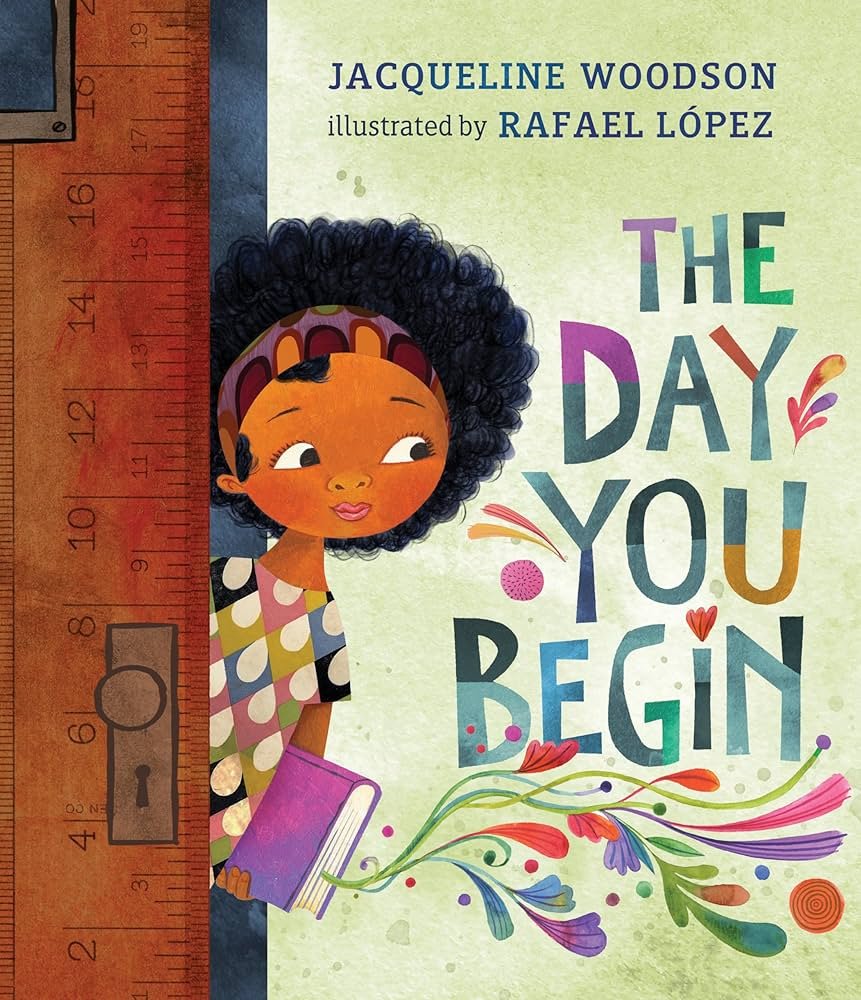
A great example is The Day You Begin by Jacqueline Woodson, illustrated by Rafael López. The book uses cut-out shapes and layered pages to draw attention.
Some pages have openings that let you peek through to the next scene which creates a sense of depth and discovery.
The cut-outs guide the reader’s eye and make the act of turning the page more engaging, almost like you are stepping through the story itself.
Another example is Press Here by Hervé Tullet. This book takes a different approach. There are no flaps or cut-outs but it still feels interactive.
The reader is asked to press, shake or tilt the book. The illustrations respond on the next page.
The art is very simple. Mostly colored dots but the interaction makes it feel alive.
It shows that interactivity does not always need complex design. Sometimes it is about how the reader is invited to engage with what they see.
What makes interactive art in children’s books so interesting is how it blends illustration with physical experience.
It slows readers down in a good way. Instead of flipping through pages quickly you stop.
It also changes how kids understand stories. They are not just following along, they are helping move things forward.
This kind of engagement can make the artwork more memorable.
Children’s book illustration is not limited to what fits on a flat page. It can extend into something more physical. For a lot of readers, that is what makes those books stick.